All news
x min read

Balancing Function and Style: Designing Commercial Workplaces That Perform

A practical guide for decision-makers planning an office fit-out, refresh, or workplace strategy project.

Why this balance matters

When a workplace looks great but doesn't work day-to-day, the cost shows up fast: noisy zones, under-utilised meeting rooms, bottlenecks at lockers and kitchens, and a culture hit when teams stop wanting to come in.

On the other hand, a purely functional fit-out can sometimes feel bland or dated, which weakens brand perception for staff, clients, and candidates.

It's not a game of style versus function. The goal is to design a workplace that performs operationally and communicates who you are.

Start with outcomes, not furniture

Before floorplans or finishes, we need to clarify what the workplace must achieve.
Typical commercial outcomes we workshop with leadership and user groups include:

  • Supporting hybrid work without empty desks or constant meeting-room shortages
  • Improve focus and reduce distraction for deep work
  • Enable collaboration for project teams and workshops
  • Lift client experience in reception areas and meeting rooms
  • Support wellbeing, accessibility, and sustainability commitments
  • Make the space easy to manage for facilities and IT

If outcomes are clear, design decisions become much easier to defend internally, especially when budgets tighten.

Five decisions that keep function and style aligned

  1. Zoning and acoustics: Great workplaces are calm and quiet in focus areas, and more open and energised in communal and collaborative spaces. The use of strategic zoning, acoustic separation, and materials can help to control noise rather than hoping people will self-manage.
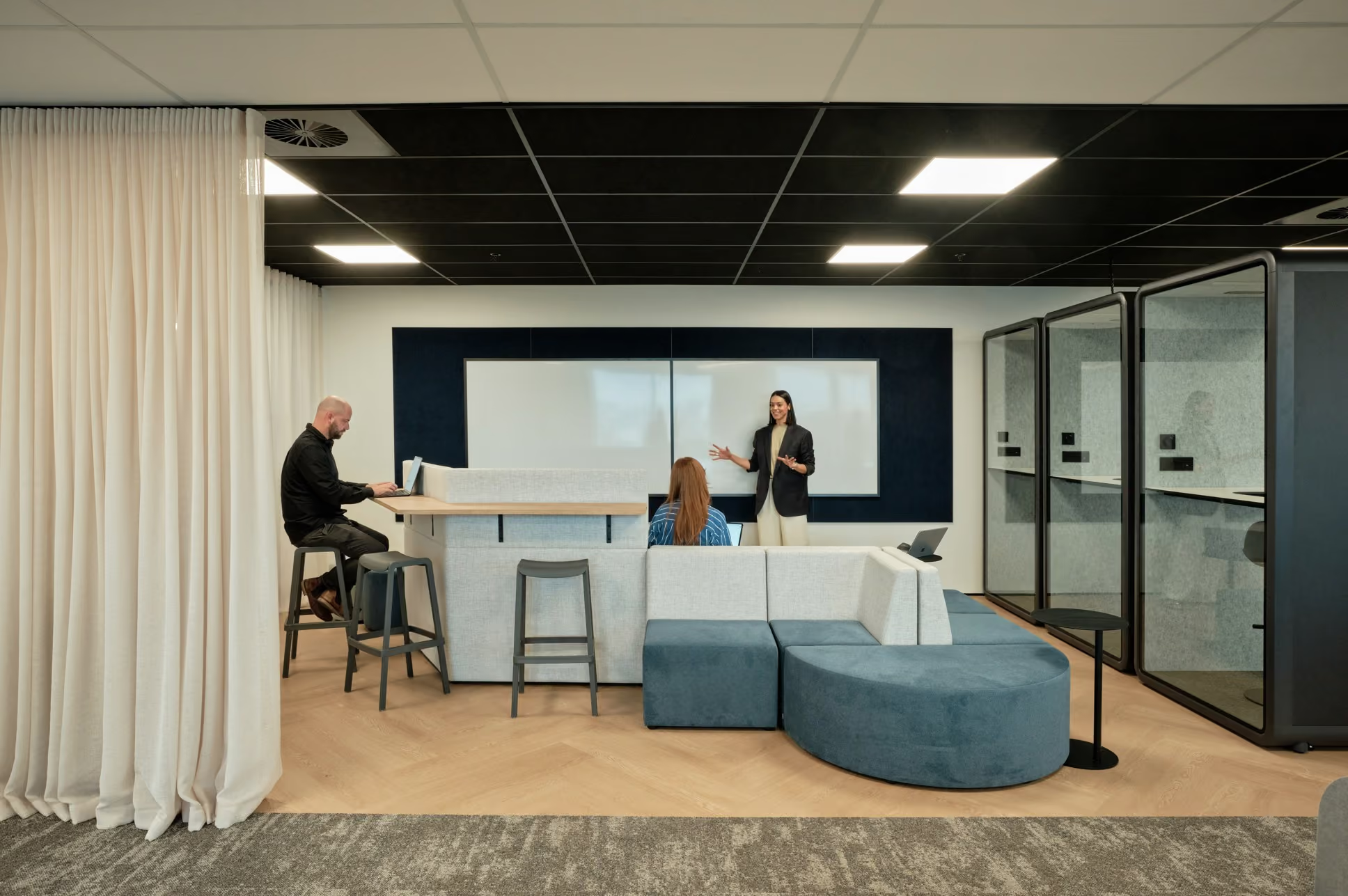
  2. The right mix of spaces: Desks are only one part of the brief. Most organisations need a blended environment with a mix of focus areas, collaboration zones, phone booths, meeting rooms, and informal spaces that your staff will actually use.
  3. Circulation and storage: The most common usability complaints are simple: not enough storage, awkward walkways, and congestion points. Fixing these early reduces daily friction and protects the look and feel long term.
  4. Brand expression through materials: Your workplace should feel like your organisation. The best brand expression is subtle and durable, infusing the space with colour, texture, lighting, and wayfinding, rather than heavy-handed signage.
  5. Maintainability and lifecycle: Finishes must survive cleaning, wear and tear through daily use, and furniture movement. Choose materials that age well, are easy to replace, and align to your sustainability goals.

Common pitfalls that derail a fit-out

  • Designing for one team’s preferences instead of the organisation’s operating model
  • Over-indexing on trends and under-investing in acoustics, storage, and power and data
  • Not having a clear decision maker, causing scope drift and delays
  • Treating workplace strategy, design, and build as separate handoffs rather than one integrated process
  • Measuring success only by aesthetics, not by how the space performs after move-in

A collaborative, end-to-end approach helps prevent these issues because the strategy, design intent, and delivery constraints are aligned from the start.

How Studio DB approaches it

Studio DB’s approach is built to reduce risk and increase certainty through our proven FUTUREPROOF. SUSTAINABLE. DELIVER.® methodology, and a consistent in-house team supporting your project from end-to end. 

  • We take the time to understand how your teams work now, and where you are heading with strategic consultancy to align the brief to your organisation, ensuring the workplace is futureproofed and stays relevant as needs evolve.
  • We support conscious decisions around materials and furniture, identify opportunities for reuse and extending the lifecycle of products, integrating decisions around sustainability into the design and preconstruction process, not as an afterthought. 
  • Seamless handover to the delivery team ensures the build is aligned with your project objectives, kept on track with clear decisions, documentation, and deliver planning. 

This matters most for commercial decision-makers because the real cost is not the fit-out line item. The real cost is disruption, delays, and a workplace that does not support performance.

A simple checklist before you approve a concept

  • Have we clearly defined project outcomes (not just design preferences)?
  • Do we have a space mix aligned to how our team works?
  • Have we addressed acoustics, storage, and technology early?
  • Is the design maintainable and realistic within budget and timeline?
  • Are we confident the space reflects our brand and supports culture?

Next step

If you are planning a workplace refresh or a full fit-out, a strategic consultancy session with our team can help you clarify scope, outcomes, and priorities before design begins. 

Book a consult to identify your workplace project objectives and develop a brief that balances function, style, and delivery reality.

Published on
Monday, February 23, 2026

Close

Oops! Something went wrong while submitting the form.

Why this balance matters

When a workplace looks great but doesn't work day-to-day, the cost shows up fast: noisy zones, under-utilised meeting rooms, bottlenecks at lockers and kitchens, and a culture hit when teams stop wanting to come in.

On the other hand, a purely functional fit-out can sometimes feel bland or dated, which weakens brand perception for staff, clients, and candidates.

It's not a game of style versus function. The goal is to design a workplace that performs operationally and communicates who you are.

Start with outcomes, not furniture

Before floorplans or finishes, we need to clarify what the workplace must achieve.
Typical commercial outcomes we workshop with leadership and user groups include:

  • Supporting hybrid work without empty desks or constant meeting-room shortages
  • Improve focus and reduce distraction for deep work
  • Enable collaboration for project teams and workshops
  • Lift client experience in reception areas and meeting rooms
  • Support wellbeing, accessibility, and sustainability commitments
  • Make the space easy to manage for facilities and IT

If outcomes are clear, design decisions become much easier to defend internally, especially when budgets tighten.

Five decisions that keep function and style aligned

  1. Zoning and acoustics: Great workplaces are calm and quiet in focus areas, and more open and energised in communal and collaborative spaces. The use of strategic zoning, acoustic separation, and materials can help to control noise rather than hoping people will self-manage.
  2. The right mix of spaces: Desks are only one part of the brief. Most organisations need a blended environment with a mix of focus areas, collaboration zones, phone booths, meeting rooms, and informal spaces that your staff will actually use.
  3. Circulation and storage: The most common usability complaints are simple: not enough storage, awkward walkways, and congestion points. Fixing these early reduces daily friction and protects the look and feel long term.
  4. Brand expression through materials: Your workplace should feel like your organisation. The best brand expression is subtle and durable, infusing the space with colour, texture, lighting, and wayfinding, rather than heavy-handed signage.
  5. Maintainability and lifecycle: Finishes must survive cleaning, wear and tear through daily use, and furniture movement. Choose materials that age well, are easy to replace, and align to your sustainability goals.

Common pitfalls that derail a fit-out

  • Designing for one team’s preferences instead of the organisation’s operating model
  • Over-indexing on trends and under-investing in acoustics, storage, and power and data
  • Not having a clear decision maker, causing scope drift and delays
  • Treating workplace strategy, design, and build as separate handoffs rather than one integrated process
  • Measuring success only by aesthetics, not by how the space performs after move-in

A collaborative, end-to-end approach helps prevent these issues because the strategy, design intent, and delivery constraints are aligned from the start.

How Studio DB approaches it

Studio DB’s approach is built to reduce risk and increase certainty through our proven FUTUREPROOF. SUSTAINABLE. DELIVER.® methodology, and a consistent in-house team supporting your project from end-to end. 

  • We take the time to understand how your teams work now, and where you are heading with strategic consultancy to align the brief to your organisation, ensuring the workplace is futureproofed and stays relevant as needs evolve.
  • We support conscious decisions around materials and furniture, identify opportunities for reuse and extending the lifecycle of products, integrating decisions around sustainability into the design and preconstruction process, not as an afterthought. 
  • Seamless handover to the delivery team ensures the build is aligned with your project objectives, kept on track with clear decisions, documentation, and deliver planning. 

This matters most for commercial decision-makers because the real cost is not the fit-out line item. The real cost is disruption, delays, and a workplace that does not support performance.

A simple checklist before you approve a concept

  • Have we clearly defined project outcomes (not just design preferences)?
  • Do we have a space mix aligned to how our team works?
  • Have we addressed acoustics, storage, and technology early?
  • Is the design maintainable and realistic within budget and timeline?
  • Are we confident the space reflects our brand and supports culture?

Next step

If you are planning a workplace refresh or a full fit-out, a strategic consultancy session with our team can help you clarify scope, outcomes, and priorities before design begins. 

Book a consult to identify your workplace project objectives and develop a brief that balances function, style, and delivery reality.

Share this post

Balancing Function and Style: Designing Commercial Workplaces That Perform

A practical guide for decision-makers planning an office fit-out, refresh, or workplace strategy project.
Date
23 Feb
2026
Author
Studio DB
Category
Design

Why this balance matters

When a workplace looks great but doesn't work day-to-day, the cost shows up fast: noisy zones, under-utilised meeting rooms, bottlenecks at lockers and kitchens, and a culture hit when teams stop wanting to come in.

On the other hand, a purely functional fit-out can sometimes feel bland or dated, which weakens brand perception for staff, clients, and candidates.

It's not a game of style versus function. The goal is to design a workplace that performs operationally and communicates who you are.

Start with outcomes, not furniture

Before floorplans or finishes, we need to clarify what the workplace must achieve.
Typical commercial outcomes we workshop with leadership and user groups include:

  • Supporting hybrid work without empty desks or constant meeting-room shortages
  • Improve focus and reduce distraction for deep work
  • Enable collaboration for project teams and workshops
  • Lift client experience in reception areas and meeting rooms
  • Support wellbeing, accessibility, and sustainability commitments
  • Make the space easy to manage for facilities and IT

If outcomes are clear, design decisions become much easier to defend internally, especially when budgets tighten.

Five decisions that keep function and style aligned

  1. Zoning and acoustics: Great workplaces are calm and quiet in focus areas, and more open and energised in communal and collaborative spaces. The use of strategic zoning, acoustic separation, and materials can help to control noise rather than hoping people will self-manage.
  2. The right mix of spaces: Desks are only one part of the brief. Most organisations need a blended environment with a mix of focus areas, collaboration zones, phone booths, meeting rooms, and informal spaces that your staff will actually use.
  3. Circulation and storage: The most common usability complaints are simple: not enough storage, awkward walkways, and congestion points. Fixing these early reduces daily friction and protects the look and feel long term.
  4. Brand expression through materials: Your workplace should feel like your organisation. The best brand expression is subtle and durable, infusing the space with colour, texture, lighting, and wayfinding, rather than heavy-handed signage.
  5. Maintainability and lifecycle: Finishes must survive cleaning, wear and tear through daily use, and furniture movement. Choose materials that age well, are easy to replace, and align to your sustainability goals.

Common pitfalls that derail a fit-out

  • Designing for one team’s preferences instead of the organisation’s operating model
  • Over-indexing on trends and under-investing in acoustics, storage, and power and data
  • Not having a clear decision maker, causing scope drift and delays
  • Treating workplace strategy, design, and build as separate handoffs rather than one integrated process
  • Measuring success only by aesthetics, not by how the space performs after move-in

A collaborative, end-to-end approach helps prevent these issues because the strategy, design intent, and delivery constraints are aligned from the start.

How Studio DB approaches it

Studio DB’s approach is built to reduce risk and increase certainty through our proven FUTUREPROOF. SUSTAINABLE. DELIVER.® methodology, and a consistent in-house team supporting your project from end-to end. 

  • We take the time to understand how your teams work now, and where you are heading with strategic consultancy to align the brief to your organisation, ensuring the workplace is futureproofed and stays relevant as needs evolve.
  • We support conscious decisions around materials and furniture, identify opportunities for reuse and extending the lifecycle of products, integrating decisions around sustainability into the design and preconstruction process, not as an afterthought. 
  • Seamless handover to the delivery team ensures the build is aligned with your project objectives, kept on track with clear decisions, documentation, and deliver planning. 

This matters most for commercial decision-makers because the real cost is not the fit-out line item. The real cost is disruption, delays, and a workplace that does not support performance.

A simple checklist before you approve a concept

  • Have we clearly defined project outcomes (not just design preferences)?
  • Do we have a space mix aligned to how our team works?
  • Have we addressed acoustics, storage, and technology early?
  • Is the design maintainable and realistic within budget and timeline?
  • Are we confident the space reflects our brand and supports culture?

Next step

If you are planning a workplace refresh or a full fit-out, a strategic consultancy session with our team can help you clarify scope, outcomes, and priorities before design begins. 

Book a consult to identify your workplace project objectives and develop a brief that balances function, style, and delivery reality.

Want to see more?

View all

We would love to chat!

Tell us what’s on your mind. Give us a call or send an email. Whatever works best.