All news
x min read

Workspace Design Trends in Education Projects: Shaping the Future of Learning

Education spaces are evolving rapidly to meet the needs of modern learners and educators. Schools and universities are no longer just places for lectures. They are dynamic environments that foster collaboration, creativity, and well-being. At Studio DB we see this transformation firsthand and believe thoughtful design plays a critical role in creating spaces that inspire and adapt. Here are the key trends shaping education projects today.

Flexible and Adaptive Learning Spaces

Modern classrooms are designed to adapt to different teaching styles and activities.

  • Modular Furniture: Lightweight, movable desks and chairs allow quick reconfiguration for lectures, group work, or individual study.
  • Multi-purpose Zones: Spaces that can shift from formal instruction to informal collaboration make learning more engaging.
  • Bleacher Seating and Writable Walls: Perfect for brainstorming sessions, project-based learning, and informal gatherings, these features encourage interaction and creativity.

Teacher-Centric Design for Retention

Supporting educators is just as important as designing for students.

  • Wellness Zones: Quiet lounges, yoga rooms, and fitness areas help reduce burnout and support mental health.
  • Collaborative Staff Spaces: Comfortable areas for informal mentoring and team planning foster community and reduce isolation among staff.

Hybrid and Tech-Enabled Workspaces

Technology is redefining how education happens.

  • Hybrid Classrooms: Equipped with AV tools, cameras, and screens to support remote and in-person learning simultaneously.
  • Hot Desking: Universities are adopting corporate-style workspace strategies to optimize space and support hybrid staff.
  • AV VR Labs and Podcast Studios: Emerging tech spaces enable experiential learning and digital content creation.

Sustainability and Biophilic Design

Green design is no longer optional. It is essential.

  • Natural Light and Greenery: Improves concentration, reduces stress, and boosts well-being for both students and staff.
  • Passive Design: Schools are incorporating energy-efficient systems to reduce environmental impact and operational costs.

Education Workspace Design Done Right: Three Inspiring Projects

WPP Madrid Education Project

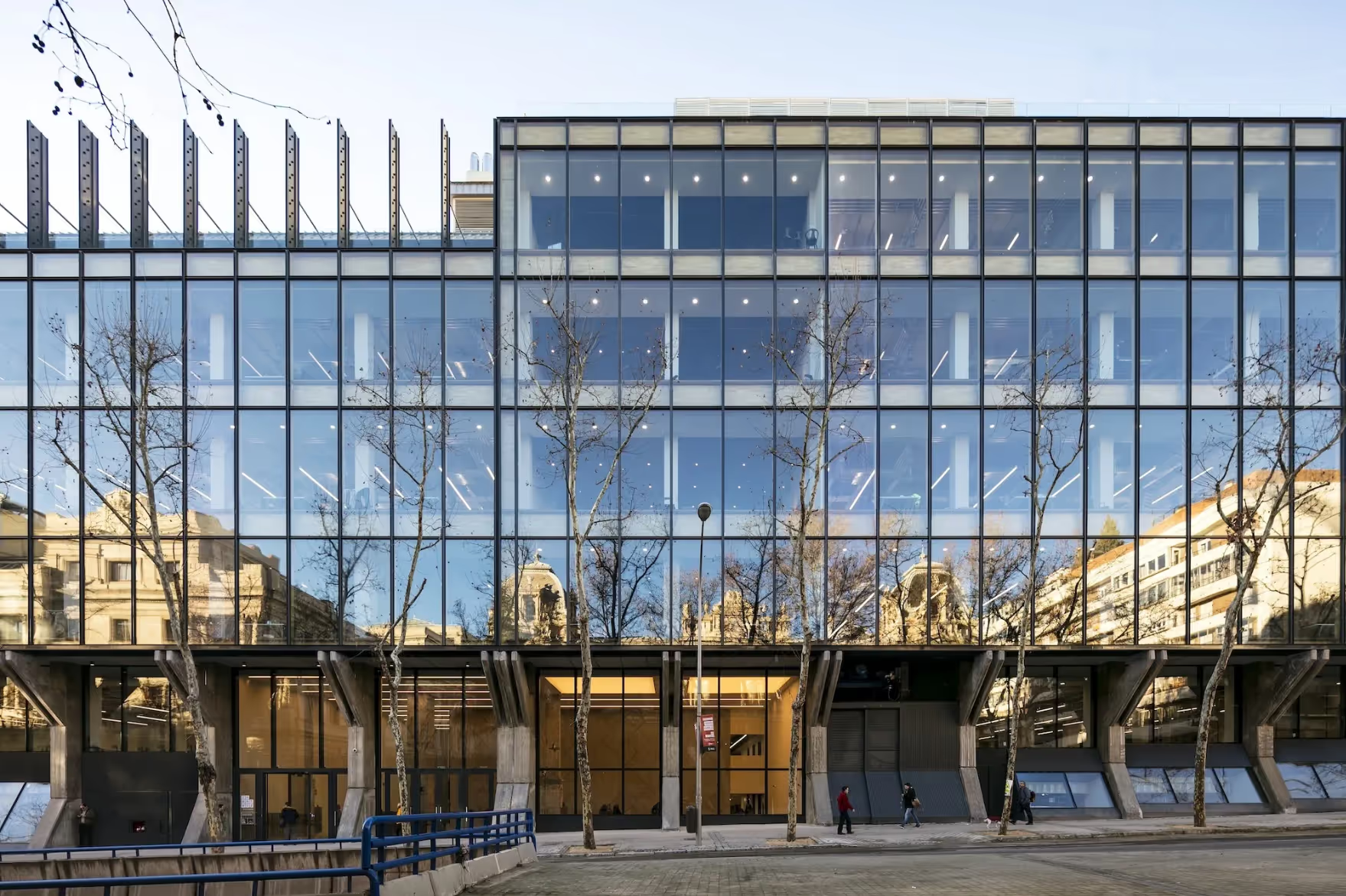
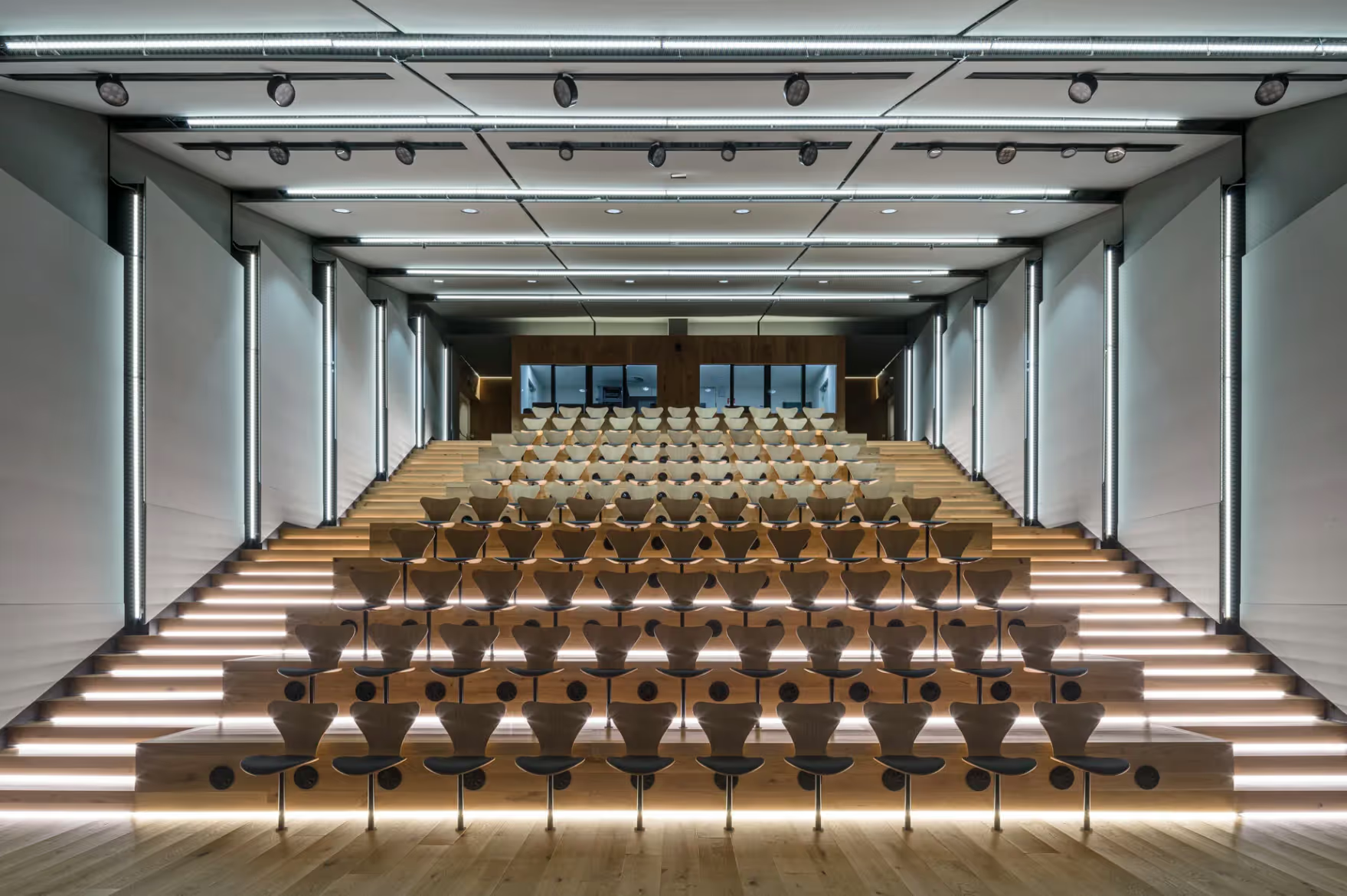
WPP’s La Matriz campus in Madrid is a forward-thinking education and collaboration hub that reflects the principles of flexibility, technology integration, and sustainability. Designed to bring together multiple agencies under one roof, the space includes modular furniture and multi-purpose zones that can adapt to lectures, workshops, and informal gatherings. Bleacher seating and writable walls encourage brainstorming and project-based learning, while open-plan layouts foster transparency and community. The campus is fully equipped with advanced AV technology to support hybrid learning and global connectivity, making it ideal for both in-person and remote collaboration. Natural light floods the interiors, complemented by greenery and energy-efficient systems that align with biophilic and sustainable design principles. La Matriz demonstrates how corporate-inspired strategies such as hot desking and shared amenities can be successfully applied to education-focused environments, creating a vibrant, tech-enabled space that promotes creativity and engagement.
Studio DB Education First Project

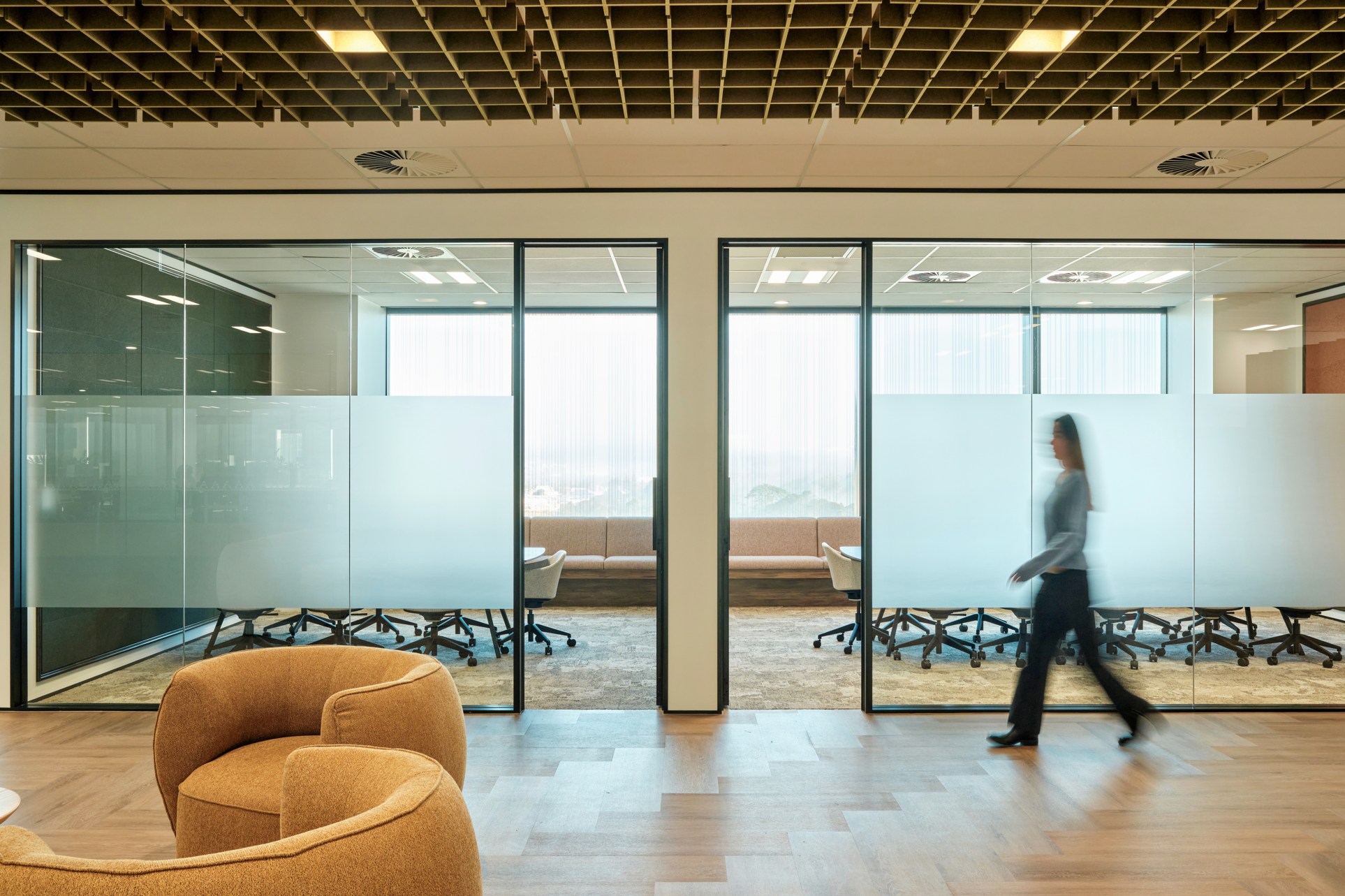
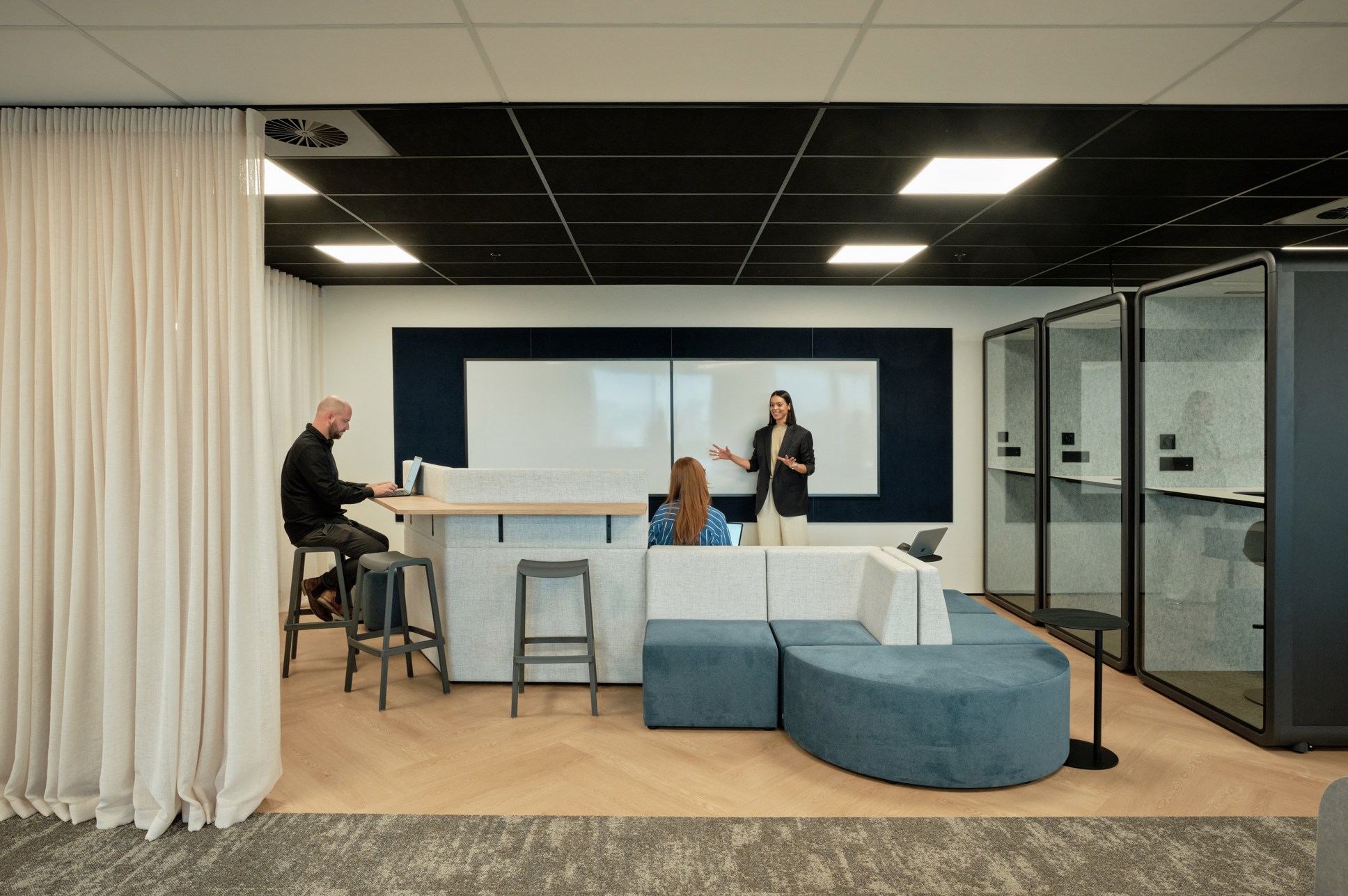
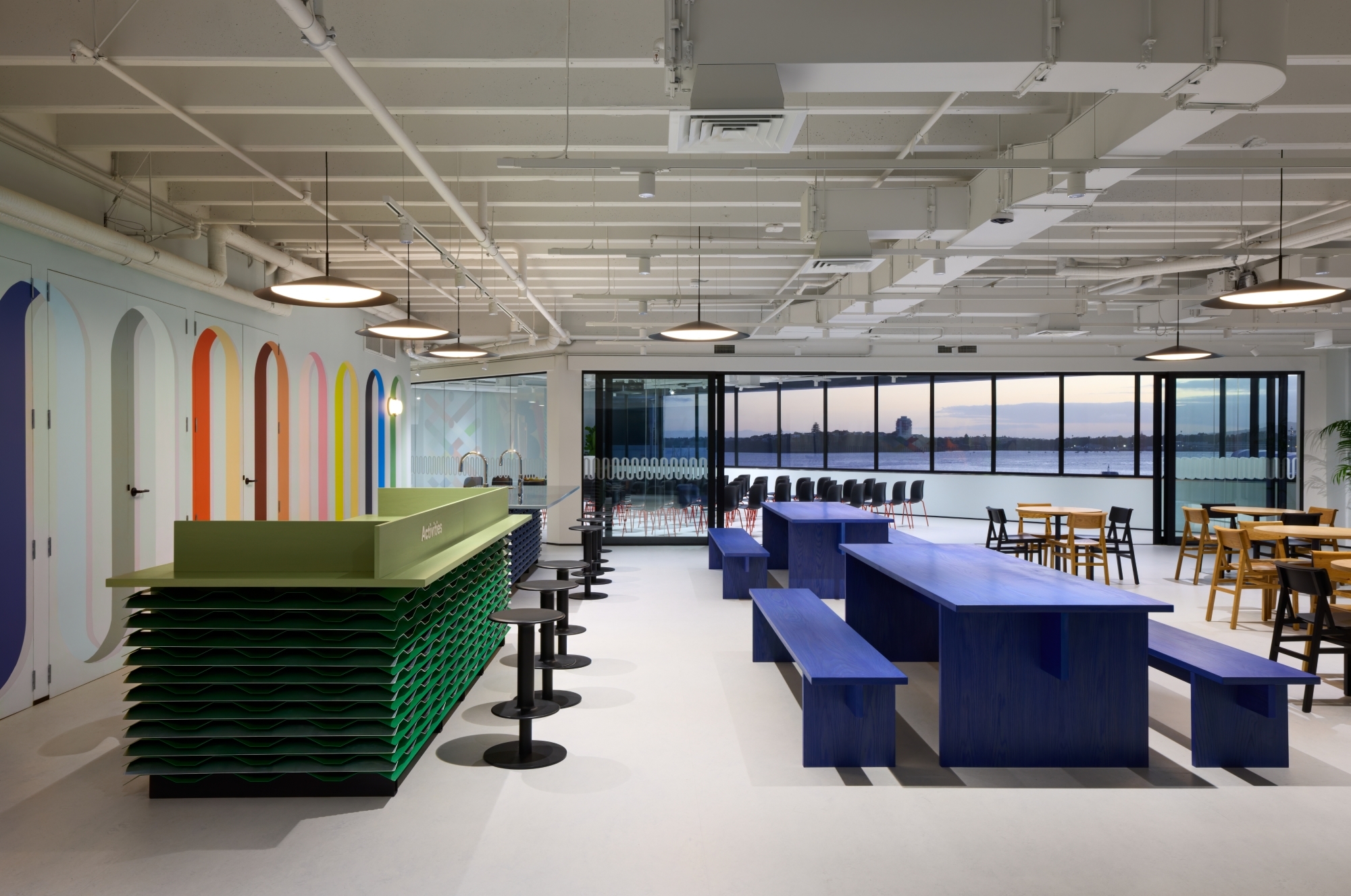
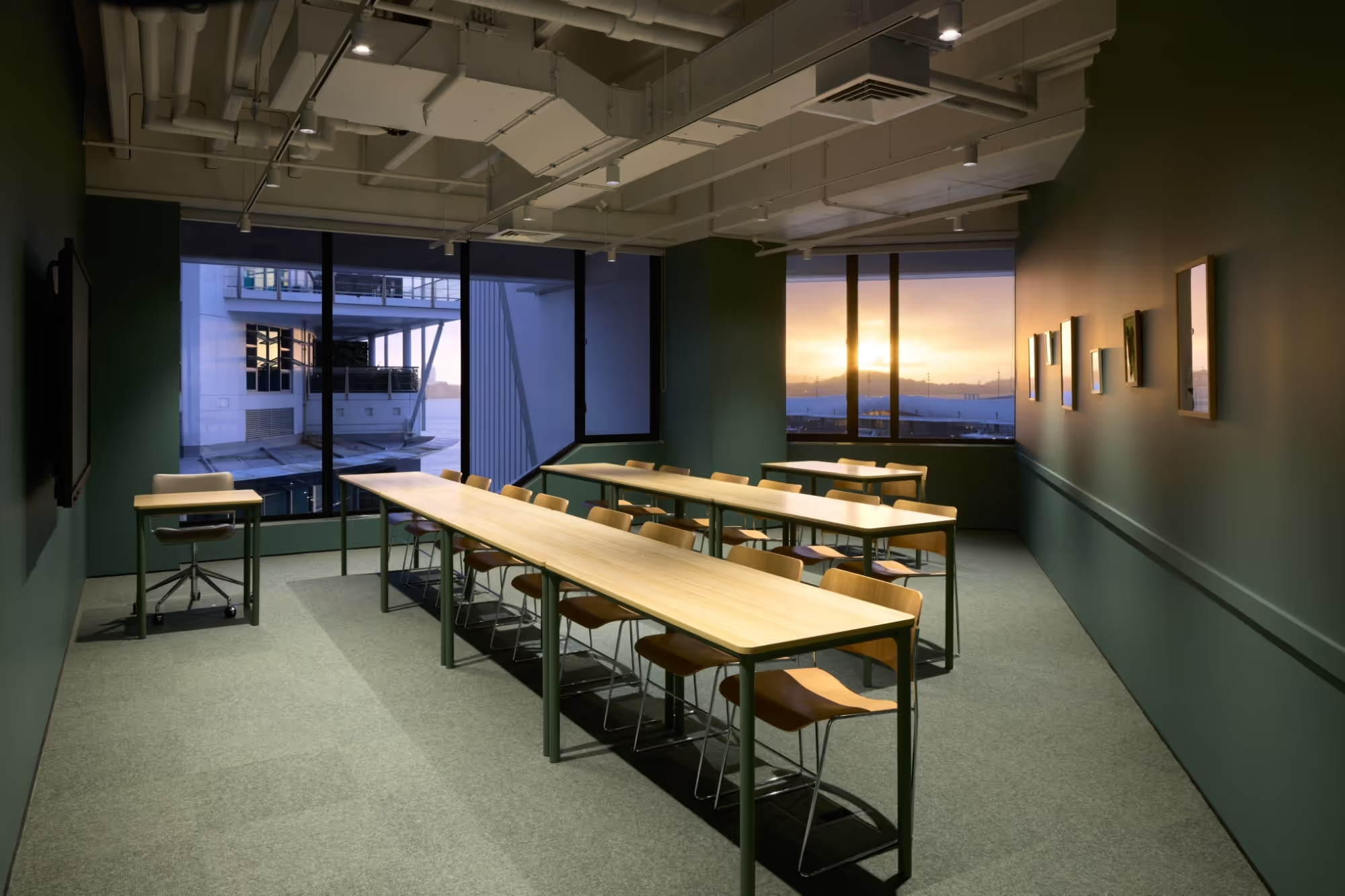
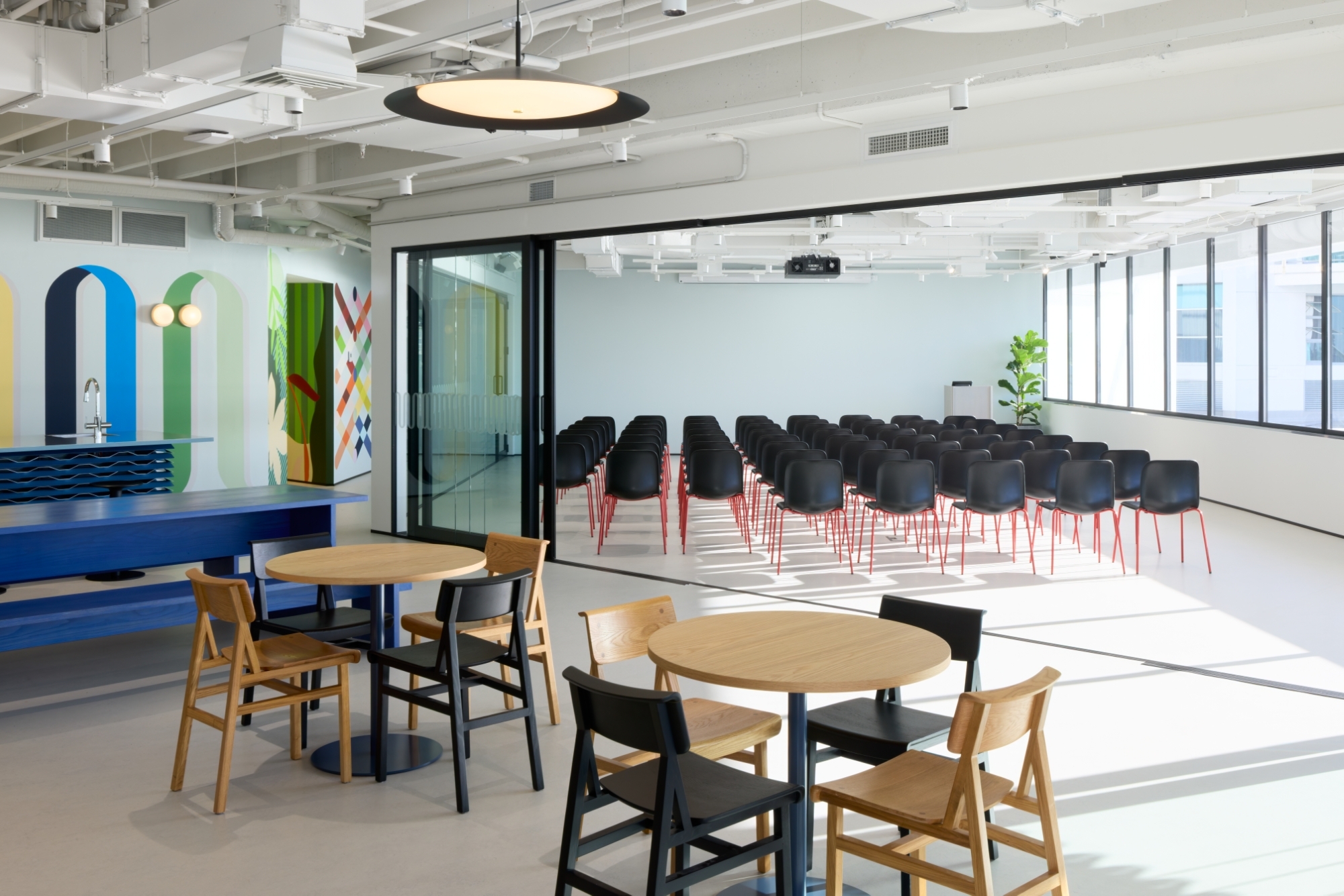
Studio DB’s Education First campus in Auckland is a striking example of flexible and adaptive design for modern learning environments. Located on Princes Wharf with views of the Waitematā Harbour, the space uses modular joinery crafted from repurposed shipping container panels, reflecting the city’s maritime heritage while supporting quick reconfiguration for different learning modes. Multi-purpose zones allow seamless transitions between lectures, group collaboration, and individual study, complemented by quiet areas that promote well-being and informal staff student interaction. The interior balances industrial character with soft textures and natural tones inspired by local flora and coastal landscapes, aligning with biophilic principles and creating a calm, welcoming atmosphere. This project demonstrates how cultural context, sustainability, and flexibility can combine to deliver an education space that feels global yet deeply connected to its location.
Warren and Mahoney University of Auckland Project

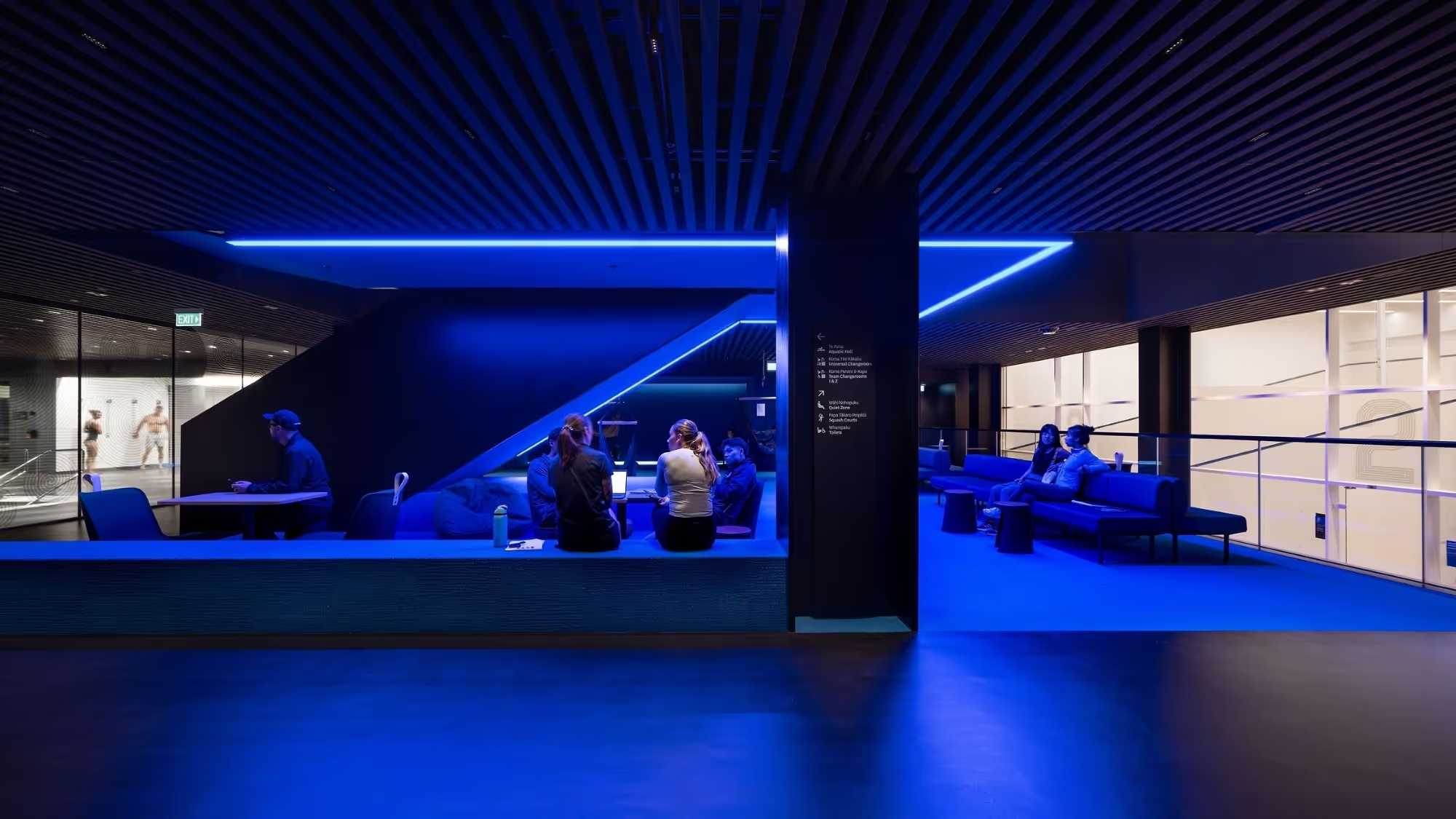
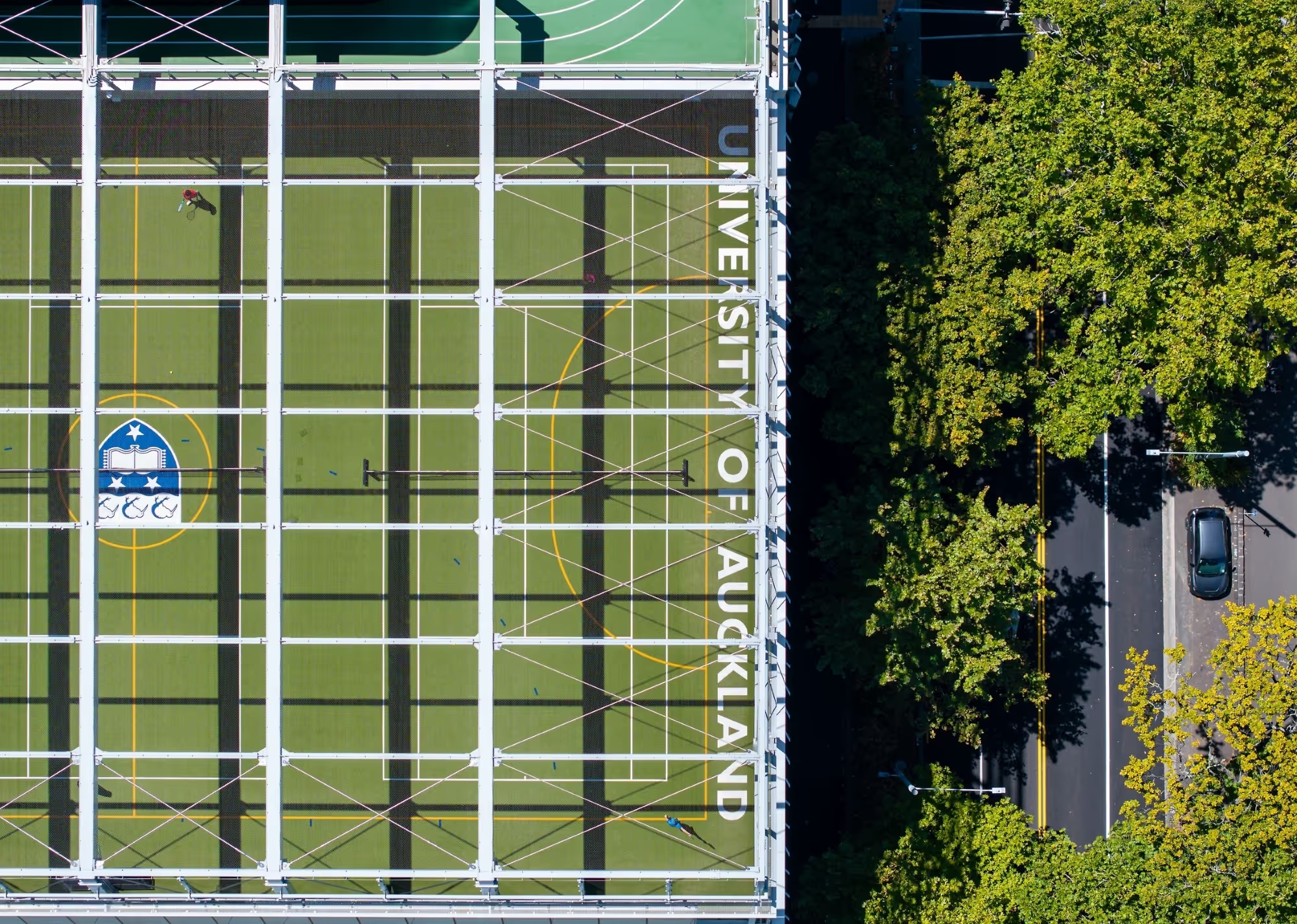
Warren and Mahoney’s Hiwa Recreation Centre at Waipapa Tāumata Rau (University of Auckland) exemplifies how education spaces can integrate wellness, flexibility, and sustainability. The eight-level vertical campus combines active recreation areas such as pools, courts, and rooftop turf with generous social and study zones that encourage collaboration and quiet focus. Its design supports mental health and academic success while embedding Māori cultural identity through carved timber, tukutuku motifs, and interpretive graphics. Natural light, energy-efficient systems, and biophilic elements enhance wellbeing, and the transparent layout with visible fitness circuits promotes movement and engagement. Hiwa demonstrates how hybrid learning, wellness zones, and cultural depth can coexist in a single inspiring environment, setting a benchmark for future education projects.
The Future of Education Spaces

At Studio DB we believe education environments will continue to evolve toward flexibility, technology integration, and wellness. Spaces must adapt quickly for different learning styles, support hybrid engagement, and incorporate natural light and sustainable materials. Our goal is to design environments that inspire learning, foster community, and promote well-being while staying connected to cultural and environmental context.
Ready to rethink your workplace experience? We’d love to chat.

Published on
Thursday, December 18, 2025

Close

Oops! Something went wrong while submitting the form.

Flexible and Adaptive Learning Spaces

Modern classrooms are designed to adapt to different teaching styles and activities.

  • Modular Furniture: Lightweight, movable desks and chairs allow quick reconfiguration for lectures, group work, or individual study.
  • Multi-purpose Zones: Spaces that can shift from formal instruction to informal collaboration make learning more engaging.
  • Bleacher Seating and Writable Walls: Perfect for brainstorming sessions, project-based learning, and informal gatherings, these features encourage interaction and creativity.

Teacher-Centric Design for Retention

Supporting educators is just as important as designing for students.

  • Wellness Zones: Quiet lounges, yoga rooms, and fitness areas help reduce burnout and support mental health.
  • Collaborative Staff Spaces: Comfortable areas for informal mentoring and team planning foster community and reduce isolation among staff.

Hybrid and Tech-Enabled Workspaces

Technology is redefining how education happens.

  • Hybrid Classrooms: Equipped with AV tools, cameras, and screens to support remote and in-person learning simultaneously.
  • Hot Desking: Universities are adopting corporate-style workspace strategies to optimize space and support hybrid staff.
  • AV VR Labs and Podcast Studios: Emerging tech spaces enable experiential learning and digital content creation.

Sustainability and Biophilic Design

Green design is no longer optional. It is essential.

  • Natural Light and Greenery: Improves concentration, reduces stress, and boosts well-being for both students and staff.
  • Passive Design: Schools are incorporating energy-efficient systems to reduce environmental impact and operational costs.

Education Workspace Design Done Right: Three Inspiring Projects

WPP Madrid Education Project

WPP’s La Matriz campus in Madrid is a forward-thinking education and collaboration hub that reflects the principles of flexibility, technology integration, and sustainability. Designed to bring together multiple agencies under one roof, the space includes modular furniture and multi-purpose zones that can adapt to lectures, workshops, and informal gatherings. Bleacher seating and writable walls encourage brainstorming and project-based learning, while open-plan layouts foster transparency and community. The campus is fully equipped with advanced AV technology to support hybrid learning and global connectivity, making it ideal for both in-person and remote collaboration. Natural light floods the interiors, complemented by greenery and energy-efficient systems that align with biophilic and sustainable design principles. La Matriz demonstrates how corporate-inspired strategies such as hot desking and shared amenities can be successfully applied to education-focused environments, creating a vibrant, tech-enabled space that promotes creativity and engagement.


Studio DB Education First Project

Studio DB’s Education First campus in Auckland is a striking example of flexible and adaptive design for modern learning environments. Located on Princes Wharf with views of the Waitematā Harbour, the space uses modular joinery crafted from repurposed shipping container panels, reflecting the city’s maritime heritage while supporting quick reconfiguration for different learning modes. Multi-purpose zones allow seamless transitions between lectures, group collaboration, and individual study, complemented by quiet areas that promote well-being and informal staff student interaction. The interior balances industrial character with soft textures and natural tones inspired by local flora and coastal landscapes, aligning with biophilic principles and creating a calm, welcoming atmosphere. This project demonstrates how cultural context, sustainability, and flexibility can combine to deliver an education space that feels global yet deeply connected to its location.


Warren and Mahoney University of Auckland Project

Warren and Mahoney’s Hiwa Recreation Centre at Waipapa Tāumata Rau (University of Auckland) exemplifies how education spaces can integrate wellness, flexibility, and sustainability. The eight-level vertical campus combines active recreation areas such as pools, courts, and rooftop turf with generous social and study zones that encourage collaboration and quiet focus. Its design supports mental health and academic success while embedding Māori cultural identity through carved timber, tukutuku motifs, and interpretive graphics. Natural light, energy-efficient systems, and biophilic elements enhance wellbeing, and the transparent layout with visible fitness circuits promotes movement and engagement. Hiwa demonstrates how hybrid learning, wellness zones, and cultural depth can coexist in a single inspiring environment, setting a benchmark for future education projects.

The Future of Education Spaces

At Studio DB we believe education environments will continue to evolve toward flexibility, technology integration, and wellness. Spaces must adapt quickly for different learning styles, support hybrid engagement, and incorporate natural light and sustainable materials. Our goal is to design environments that inspire learning, foster community, and promote well-being while staying connected to cultural and environmental context.

Ready to rethink your workplace experience? We’d love to chat.

Share this post

Workspace Design Trends in Education Projects: Shaping the Future of Learning

Education spaces are evolving rapidly to meet the needs of modern learners and educators. Schools and universities are no longer just places for lectures. They are dynamic environments that foster collaboration, creativity, and well-being. At Studio DB we see this transformation firsthand and believe thoughtful design plays a critical role in creating spaces that inspire and adapt. Here are the key trends shaping education projects today.
Date
18 Dec
2025
Author
Studio DB
Category
Insights

Flexible and Adaptive Learning Spaces

Modern classrooms are designed to adapt to different teaching styles and activities.

  • Modular Furniture: Lightweight, movable desks and chairs allow quick reconfiguration for lectures, group work, or individual study.
  • Multi-purpose Zones: Spaces that can shift from formal instruction to informal collaboration make learning more engaging.
  • Bleacher Seating and Writable Walls: Perfect for brainstorming sessions, project-based learning, and informal gatherings, these features encourage interaction and creativity.

Teacher-Centric Design for Retention

Supporting educators is just as important as designing for students.

  • Wellness Zones: Quiet lounges, yoga rooms, and fitness areas help reduce burnout and support mental health.
  • Collaborative Staff Spaces: Comfortable areas for informal mentoring and team planning foster community and reduce isolation among staff.

Hybrid and Tech-Enabled Workspaces

Technology is redefining how education happens.

  • Hybrid Classrooms: Equipped with AV tools, cameras, and screens to support remote and in-person learning simultaneously.
  • Hot Desking: Universities are adopting corporate-style workspace strategies to optimize space and support hybrid staff.
  • AV VR Labs and Podcast Studios: Emerging tech spaces enable experiential learning and digital content creation.

Sustainability and Biophilic Design

Green design is no longer optional. It is essential.

  • Natural Light and Greenery: Improves concentration, reduces stress, and boosts well-being for both students and staff.
  • Passive Design: Schools are incorporating energy-efficient systems to reduce environmental impact and operational costs.

Education Workspace Design Done Right: Three Inspiring Projects

WPP Madrid Education Project

WPP’s La Matriz campus in Madrid is a forward-thinking education and collaboration hub that reflects the principles of flexibility, technology integration, and sustainability. Designed to bring together multiple agencies under one roof, the space includes modular furniture and multi-purpose zones that can adapt to lectures, workshops, and informal gatherings. Bleacher seating and writable walls encourage brainstorming and project-based learning, while open-plan layouts foster transparency and community. The campus is fully equipped with advanced AV technology to support hybrid learning and global connectivity, making it ideal for both in-person and remote collaboration. Natural light floods the interiors, complemented by greenery and energy-efficient systems that align with biophilic and sustainable design principles. La Matriz demonstrates how corporate-inspired strategies such as hot desking and shared amenities can be successfully applied to education-focused environments, creating a vibrant, tech-enabled space that promotes creativity and engagement.


Studio DB Education First Project

Studio DB’s Education First campus in Auckland is a striking example of flexible and adaptive design for modern learning environments. Located on Princes Wharf with views of the Waitematā Harbour, the space uses modular joinery crafted from repurposed shipping container panels, reflecting the city’s maritime heritage while supporting quick reconfiguration for different learning modes. Multi-purpose zones allow seamless transitions between lectures, group collaboration, and individual study, complemented by quiet areas that promote well-being and informal staff student interaction. The interior balances industrial character with soft textures and natural tones inspired by local flora and coastal landscapes, aligning with biophilic principles and creating a calm, welcoming atmosphere. This project demonstrates how cultural context, sustainability, and flexibility can combine to deliver an education space that feels global yet deeply connected to its location.


Warren and Mahoney University of Auckland Project

Warren and Mahoney’s Hiwa Recreation Centre at Waipapa Tāumata Rau (University of Auckland) exemplifies how education spaces can integrate wellness, flexibility, and sustainability. The eight-level vertical campus combines active recreation areas such as pools, courts, and rooftop turf with generous social and study zones that encourage collaboration and quiet focus. Its design supports mental health and academic success while embedding Māori cultural identity through carved timber, tukutuku motifs, and interpretive graphics. Natural light, energy-efficient systems, and biophilic elements enhance wellbeing, and the transparent layout with visible fitness circuits promotes movement and engagement. Hiwa demonstrates how hybrid learning, wellness zones, and cultural depth can coexist in a single inspiring environment, setting a benchmark for future education projects.

The Future of Education Spaces

At Studio DB we believe education environments will continue to evolve toward flexibility, technology integration, and wellness. Spaces must adapt quickly for different learning styles, support hybrid engagement, and incorporate natural light and sustainable materials. Our goal is to design environments that inspire learning, foster community, and promote well-being while staying connected to cultural and environmental context.

Ready to rethink your workplace experience? We’d love to chat.

Want to see more?

View all

We would love to chat!

Tell us what’s on your mind. Give us a call or send an email. Whatever works best.