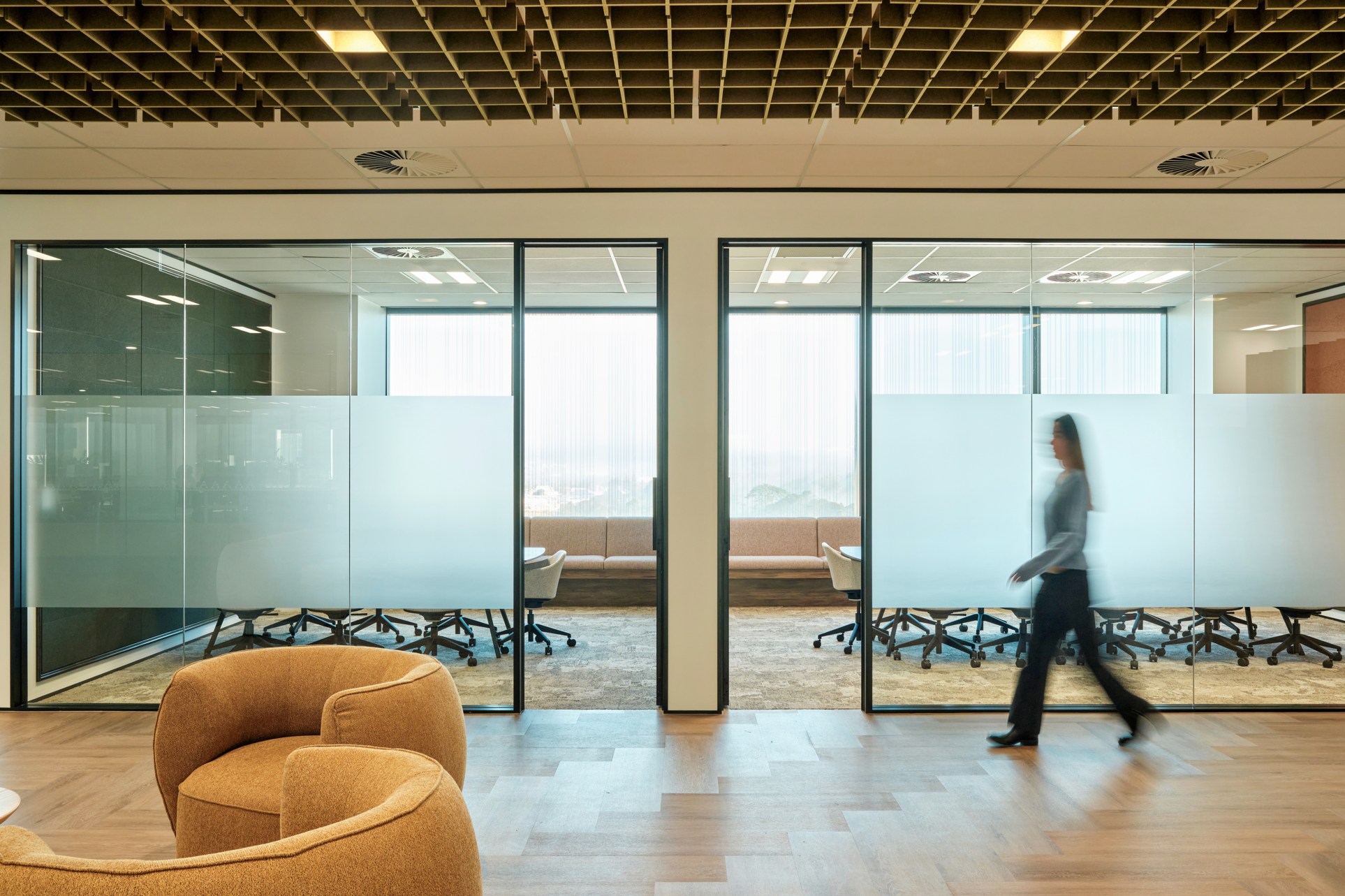
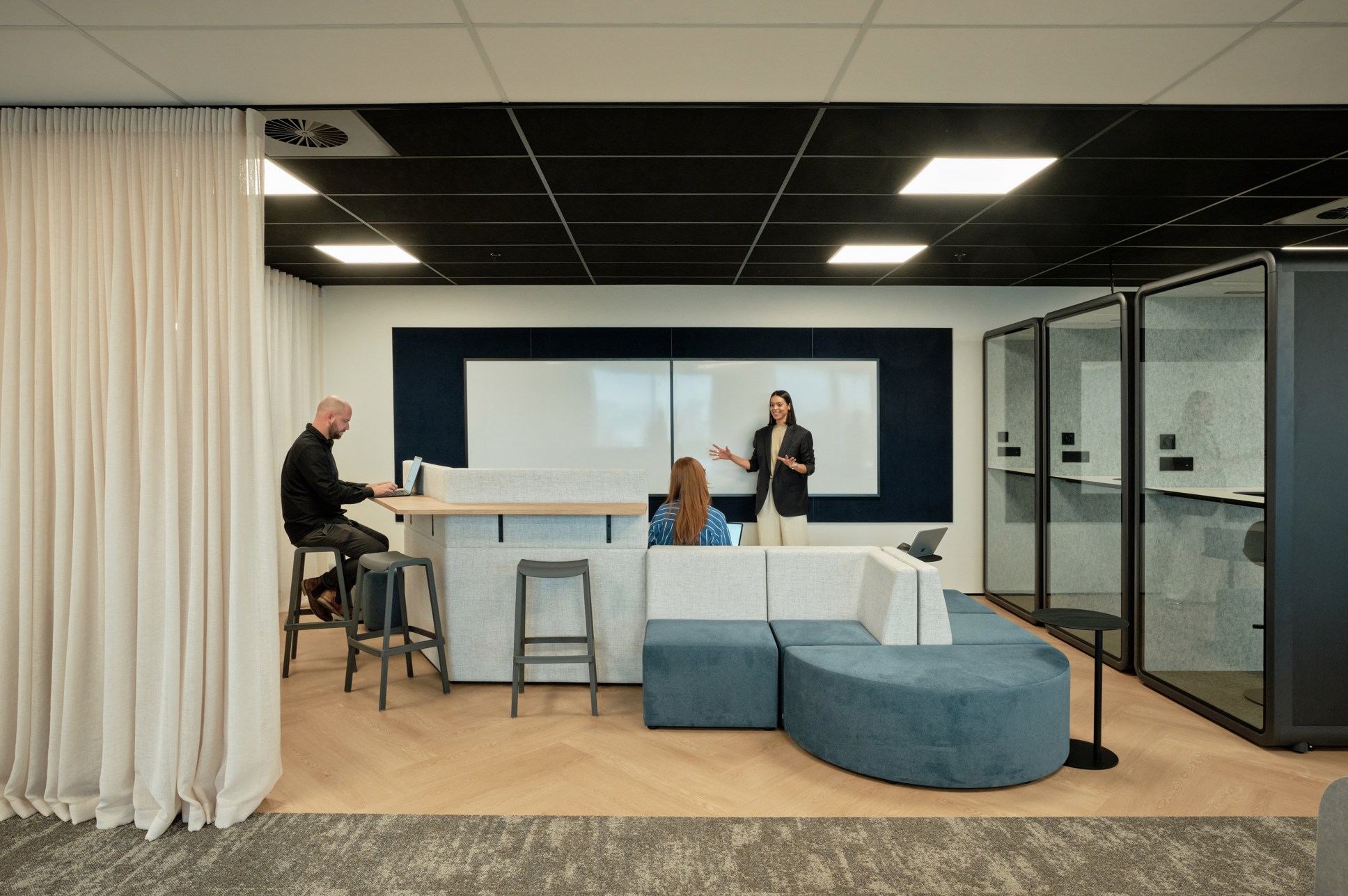
What is workplace design?
Workplace design is more than arranging desks and choosing colours—it’s a strategic approach that shapes organisational culture, fosters collaboration, and drives success. In today’s world of hybrid work and evolving employee expectations, design plays a critical role in creating environments that inspire and connect. As Bella Bertoni, a global workplace strategist, explains, the goal is to transform the office from a place of obligation into a space people genuinely want to inhabit.
Why is workplace design important?
The modern workplace must compete with the comforts of home while offering unique value through connection, culture, and collaboration. Design should incentivise attendance, not mandate it, creating spaces that support diverse workstyles—from focused individual tasks to dynamic team collaboration. Flexible, adaptable environments are essential for attracting and retaining talent, boosting productivity, and enhancing wellbeing.
Key Takeaways
- Align workplace design with organisational objectives and employee needs.
- Balance global frameworks with local cultural nuances.
- Prioritise flexibility, wellbeing, and meaningful experiences.
- Create spaces that inspire and connect people—essential for attracting and retaining talent.
The future of workplace design is rooted in strategic thinking. It’s about creating environments that empower people and position organisations for long-term success.


.avif)