From Studio DB.
Our eBook will start downloading once you click the below button. Thank you.
Click here to find out more about us0800 999 000sales@studiodb.co.nzDownload eBookOops! Something went wrong while submitting the form.
New Zealand office fitouts in 2026 look noticeably different to those of even two years ago. Businesses are taking less floor area, being more deliberate about how that space is divided up, and putting more budget into the parts of the office people actually use. The result is offices that are smaller, more carefully designed, and more honestly aligned with how New Zealand teams work. Here is what is driving that shift.
Businesses that once planned around a generous allocation per person are now working with noticeably less. With a smaller total footprint, more is going into the space they do take. Better finishes, proper acoustic treatment, meeting rooms that actually work. Less space, but better.
More New Zealand businesses are engaging a workplace strategist before committing to a lease, particularly for projects over three hundred square metres. When lease costs are what they are and attendance patterns are still shifting, getting the brief right before signing anything is one of the most valuable things you can do.
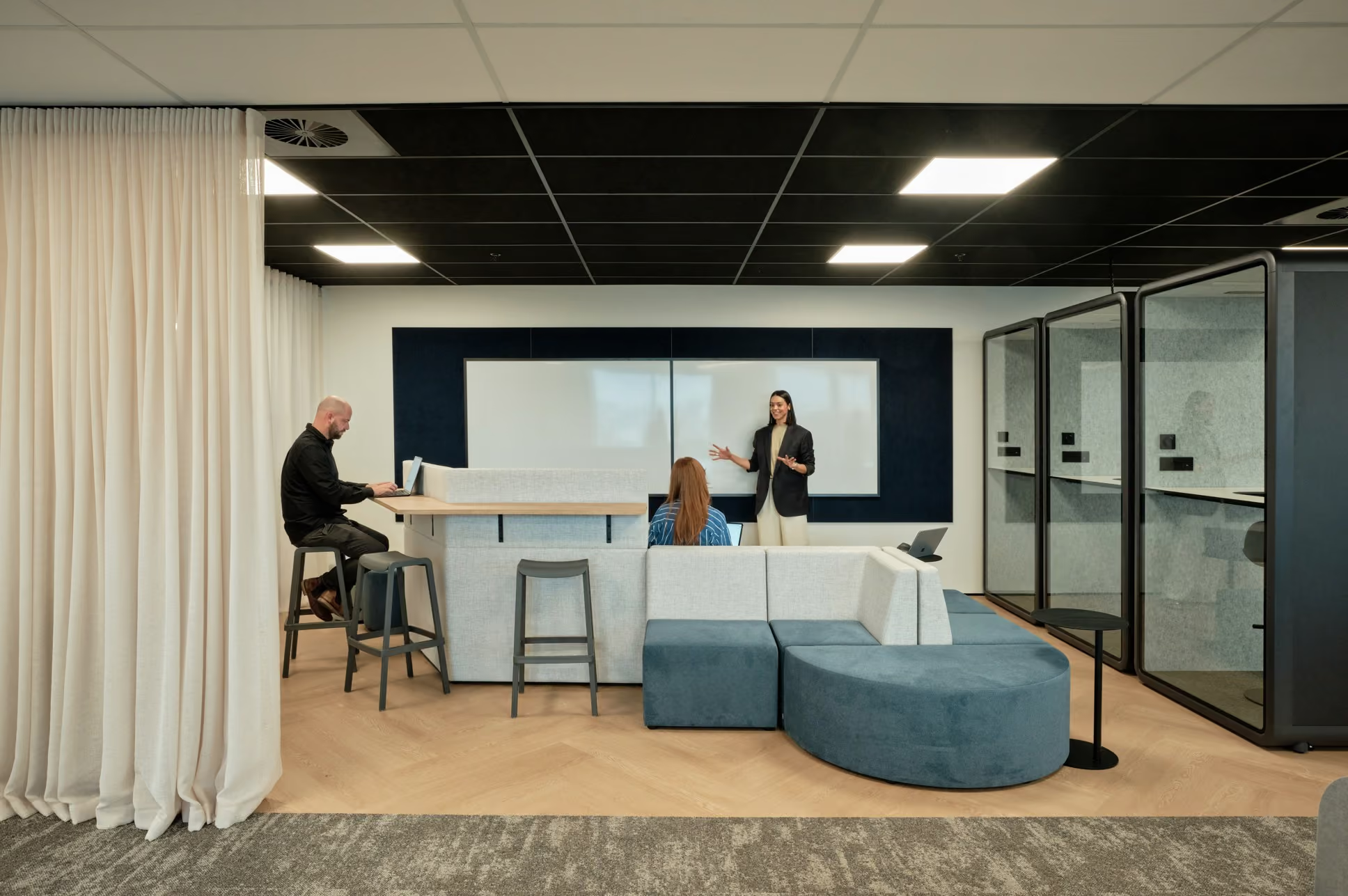
The 2026 New Zealand fitout has fewer desks relative to headcount and more supporting spaces: focus rooms, collaboration zones, meeting rooms designed for hybrid. It costs more per square metre than a traditional open plan run, but it is what makes the office genuinely worth coming in for.
We saw this play out clearly with Aderant, a global legal software company with an Auckland office. Rather than refurbishing across two levels, the strategy phase showed that consolidating onto a single, well-planned floor would serve the team better. Improving collaboration and reducing occupancy costs in the process. The brief changed entirely once the diagnostic work was done.
CBD is still the default for professional services and corporate headquarters, but fringe locations like Newmarket, Parnell, and Britomart are taking a growing share of new commitments. Parking, transport links, proximity to where staff live, and lease cost per square metre all factor in.
For businesses that do stay in the CBD, the expectation has shifted. A premium address on its own no longer does the work it once did, the fitout has to earn its place too. Latitude Finance is a good example: based in the Vero Building in Auckland Central, their fitout was designed to reflect the brand and support the way their team actually works. Panoramic city views, meeting rooms and breakout spaces built for client conversations, and a consistent blue design theme. This is a subtle reference to Māori culture and the significance of water and connection.
The key point is that the building matters more than the postcode. A fringe building has different floor plate constraints, ceiling heights, and services than a CBD tower. The fitout brief needs to be built around the actual building, not a generic assumption.
The trade-off is deliberate. Less space means lower rent across the lease term, which frees budget for a fitout that genuinely supports the team. The offices coming out of this approach are not just smaller versions of what came before, they are designed around how the team uses the space, not just how many people need to fit in it.
Activity based working has been talked about for a decade. New Zealand businesses adopting it now are doing so more carefully, having seen what went wrong when open plan was applied without enough thought. The 2026 version has a richer space with focus rooms, collaboration zones, formal meeting rooms, informal breakout areas, with a much clearer understanding of what each type of space is for.
Material specifications, embodied carbon, end-of-life recyclability, and energy efficiency are being raised at the brief stage by clients who would not have asked about them two years ago. This is most visible in larger corporates and government- adjacent organisations, but the expectation is shifting more broadly.
With rents where they are, a strategy phase that gets the floor area right, or changes the brief the way it did for Aderant - pays for itself many times over.
If your lease is three years from expiry, that is the right time to get in touch with Studio DB. We recommend starting the journey at least eighteen months out from expiry, factoring in lead times for design, planning, and build. Leave it later than that and your options start narrowing.
The meeting rooms, focus rooms, and collaboration zones that make a hybrid office actually work cost more per square metre than an open plan desk run. They are also what makes the office worth using.
For projects under two hundred square metres, a good fitout team can develop the brief through conversation. For anything larger, a dedicated strategy phase produces a stronger foundation and reduces the risk of getting it wrong.
Focus on the space mix rather than the desk count. Fewer desks, more rooms: meeting rooms, focus rooms, collaboration zones. Invest in technology that makes hybrid meetings genuinely functional. Build in flexibility so the space can adapt as patterns change.
Studio DB has been delivering commercial fitouts across New Zealand for more than 60 years. We work with businesses across the full process. From initial workplace strategy through design, build, and handover.
If you are thinking about a new fitout, a lease renewal, or a space that needs to work harder for your team, get in touch to talk through what the right approach looks like for your business.
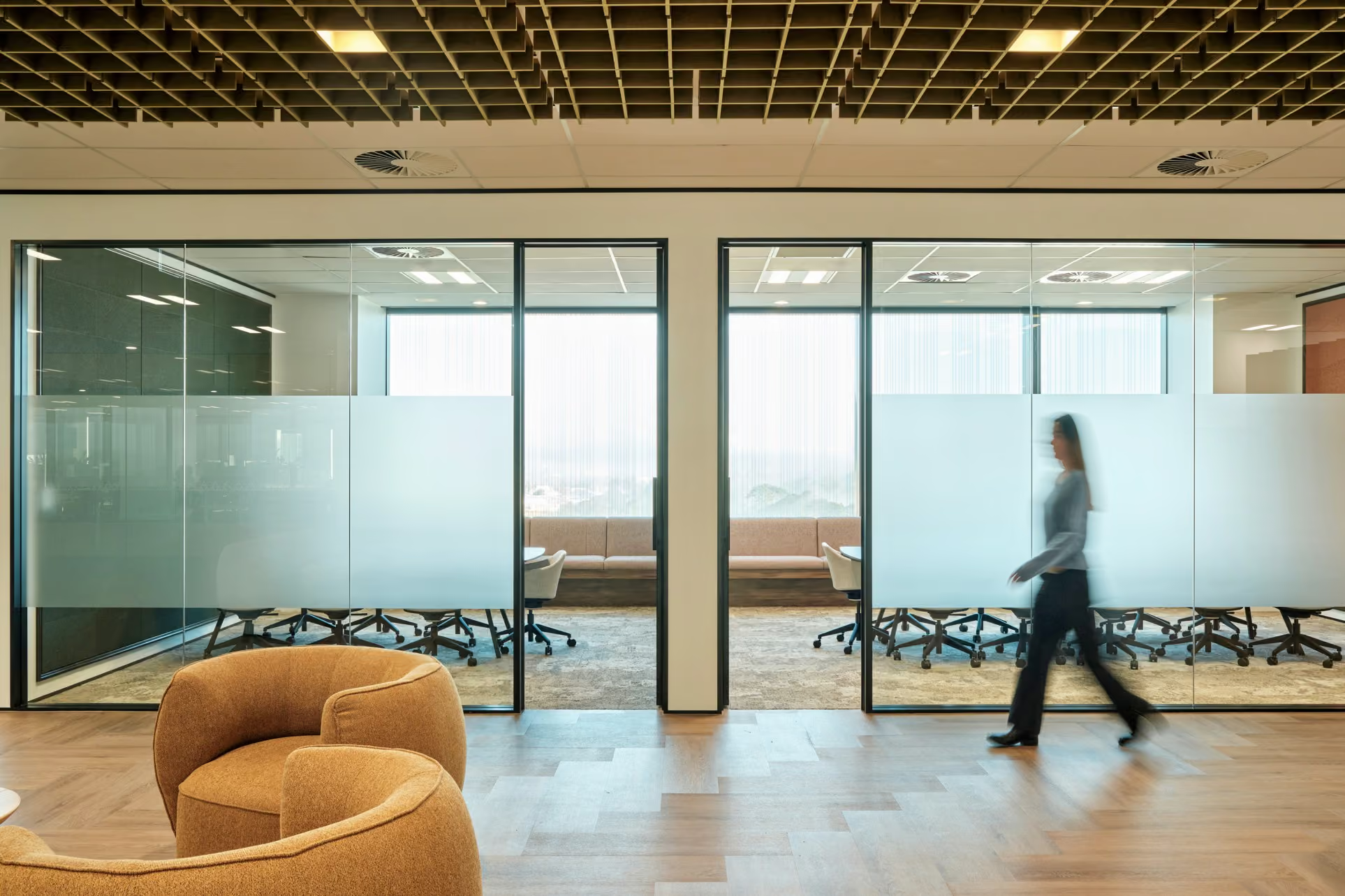
Businesses that once planned around a generous allocation per person are now working with noticeably less. With a smaller total footprint, more is going into the space they do take. Better finishes, proper acoustic treatment, meeting rooms that actually work. Less space, but better.
More New Zealand businesses are engaging a workplace strategist before committing to a lease, particularly for projects over three hundred square metres. When lease costs are what they are and attendance patterns are still shifting, getting the brief right before signing anything is one of the most valuable things you can do.
The 2026 New Zealand fitout has fewer desks relative to headcount and more supporting spaces: focus rooms, collaboration zones, meeting rooms designed for hybrid. It costs more per square metre than a traditional open plan run, but it is what makes the office genuinely worth coming in for.
We saw this play out clearly with Aderant, a global legal software company with an Auckland office. Rather than refurbishing across two levels, the strategy phase showed that consolidating onto a single, well-planned floor would serve the team better. Improving collaboration and reducing occupancy costs in the process. The brief changed entirely once the diagnostic work was done.
CBD is still the default for professional services and corporate headquarters, but fringe locations like Newmarket, Parnell, and Britomart are taking a growing share of new commitments. Parking, transport links, proximity to where staff live, and lease cost per square metre all factor in.
For businesses that do stay in the CBD, the expectation has shifted. A premium address on its own no longer does the work it once did, the fitout has to earn its place too. Latitude Finance is a good example: based in the Vero Building in Auckland Central, their fitout was designed to reflect the brand and support the way their team actually works. Panoramic city views, meeting rooms and breakout spaces built for client conversations, and a consistent blue design theme. This is a subtle reference to Māori culture and the significance of water and connection.
The key point is that the building matters more than the postcode. A fringe building has different floor plate constraints, ceiling heights, and services than a CBD tower. The fitout brief needs to be built around the actual building, not a generic assumption.
The trade-off is deliberate. Less space means lower rent across the lease term, which frees budget for a fitout that genuinely supports the team. The offices coming out of this approach are not just smaller versions of what came before, they are designed around how the team uses the space, not just how many people need to fit in it.
Activity based working has been talked about for a decade. New Zealand businesses adopting it now are doing so more carefully, having seen what went wrong when open plan was applied without enough thought. The 2026 version has a richer space with focus rooms, collaboration zones, formal meeting rooms, informal breakout areas, with a much clearer understanding of what each type of space is for.
Material specifications, embodied carbon, end-of-life recyclability, and energy efficiency are being raised at the brief stage by clients who would not have asked about them two years ago. This is most visible in larger corporates and government- adjacent organisations, but the expectation is shifting more broadly.
With rents where they are, a strategy phase that gets the floor area right, or changes the brief the way it did for Aderant - pays for itself many times over.
If your lease is three years from expiry, that is the right time to get in touch with Studio DB. We recommend starting the journey at least eighteen months out from expiry, factoring in lead times for design, planning, and build. Leave it later than that and your options start narrowing.
The meeting rooms, focus rooms, and collaboration zones that make a hybrid office actually work cost more per square metre than an open plan desk run. They are also what makes the office worth using.
For projects under two hundred square metres, a good fitout team can develop the brief through conversation. For anything larger, a dedicated strategy phase produces a stronger foundation and reduces the risk of getting it wrong.
Focus on the space mix rather than the desk count. Fewer desks, more rooms: meeting rooms, focus rooms, collaboration zones. Invest in technology that makes hybrid meetings genuinely functional. Build in flexibility so the space can adapt as patterns change.
Studio DB has been delivering commercial fitouts across New Zealand for more than 60 years. We work with businesses across the full process. From initial workplace strategy through design, build, and handover.
If you are thinking about a new fitout, a lease renewal, or a space that needs to work harder for your team, get in touch to talk through what the right approach looks like for your business.

Our thinking
Tell us what’s on your mind. Give us a call or send an email. Whatever works best.